The Musicarta
Beat and Rhythm Workbook
Learning beat and rhythm methodically
Most popular music has a strong rhythmic component – and the modern-styles keyboard player needs well-developed beat and rhythm skills just to stay in the game.
Our usual way of trying to ‘get’ difficult rhythms – namely, just trying again and again – is unscientific, inefficient and frustrating, leaving many people believing that, when it comes to syncopation and advanced rhythms, you’ve either ‘got it’ or you haven’t.
Well, that’s just not true! With the right learning material, anybody can be much better at syncopation than they ever thought possible! What's needed is a head-on, methodical approach with rhythm skills centre-stage.
Here's a video intro to the Musicarta Beat and Rhythm Workbook.
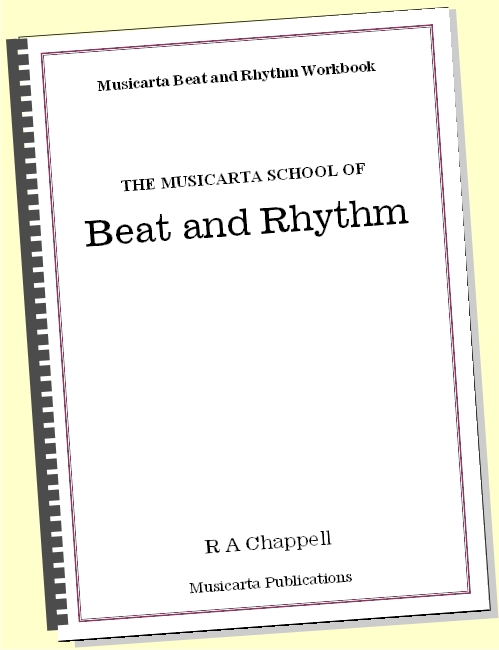
The Musicarta BEAT AND RHYTHM Workbook
|
Most
popular music has a strong rhythmic component – and the modern-styles keyboard
player needs well-developed beat and rhythm skills to participate fully. With four full lesson series that will give you absolutely the best chance to break through to professional-level two-handed syncopation and rhythms! |
 |
Hop aboard  |
Take a look at those four modules in a bit more detail...
The Snake Dance
|
First, the Snake Dance, that timeless novelty piano teachers hate - but which everyone else instinctively moves to! It's fun and engaging, and the basis for a whole raft of big-and-bold two-handed rhythms designed to loosen you up and get you started. Nobody gets left behind in the build-up to the basic syncopated version; after that it's no holds barred! Crossed hands - left hand off the beat - left hand in 'staggered quavers' - longer rhythmic patterns - ornaments - harmonisation - medleys... It's a whirlwind tour of keyboard creativity that will leave you asking, "Why didn't I think of that?" Well, from now on - you will! All the while, you're 'getting your ear in'. One advantage of "digging one well deep" like this is that you start 'seeing the music in the keyboard' - the secret to playing by ear. Result? You can go to the piano - and just "sit down and play". |
|
Syncopation and Anticipation Tenths
Popular music is characterised by a high proportion of notes played 'off the beat', known in music as syncopation or anticipation. Ragtime (ragged time) music, the fore-runner of jazz, exploited syncopation as its main selling point – and popular music has absorbed the habit wholesale.
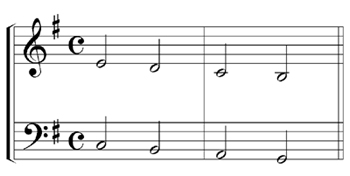
Modern popular-styles musicians need to have these beat and rhythm skills ‘in the bone’. The Syncopation and Anticipation Tenths module in the Beat and Rhythm Workbook methodically to build a melodic style of two-handed syncopation which will be instantly familiar to anybody who knows their music.
Listen to the development of syncopation in this simple run of tenths.
 |
|
Might not be exactly "what you've always dreamed of playing", but
- The step-by-step progression leaves no-one behind;
- The simplicity of the material makes focusing on the rhythmic component easier; and
- The rhythmic skills coached here are timeless and indispensable.
Workbook structure - what you get
The Musicarta Beat and Rhythm Workbook consist of four modules (lesson series), each 'lesson' on its own web-page with full video tuition and demonstration and down-loadable lesson notes and music (PDF) where relevant.
There are forty-five fully featured web pages, and more than four hours of video material.
For direct Musicarta customers, the lessons are accessed via a password-protected 'members-only' portal - you get your own, unique password when you order via E-junkie (terrible name, rock-solid platform!)
(Musicarta teaching material is available on a number of educational video platforms - but MisterMusicarta would prefer you to 'buy direct'!!)
The Beat and Rhythm Workbook is also available on Musicarta Patreon, along with a whole lot more. Check out this highly attractive and very economical offer on the Musicarta Patreon web page.
The Musicarta BEAT AND RHYTHM Workbook
|
Syncopated, two-handed rhythms at the keyboard are not easy, but with the right learning material, everybody can be much better at syncopation than they ever thought possible! With forty-plus full-featured web-page lessons and over four hours of coaching video, you can’t fail to make stellar progress! |
|
Get started for only |
Next up...
The Swinging Hanon
|
Spend any time learning the piano and sooner or later you'll run into 'Hanon' - those perennial finger exercise that, well, just work...! (Why, Musicarta even has a whole Hanon video course...) So why not 'light two candles with one match' and practice crisp rhythms along with your finger warm-up? You learn the rhythms first in a static, five-finger position, then apply them to your Hanon finger warm-ups - or anything else! |
|
(Listen to the paired demonstration audios above. NB: They're videos in the course!)
Yes - you could probably make these up yourself, but - will you? Rather just grab them off the shelf, practise one a day, and hear your skills build!
Here's a video introduction to the Swinging Hanon module in the Musicarta Beat and Rhythm Workbook.
It's practically a course in its own right!
And, lastly...
Rhythmic Pentatonic Scales
|
After a crash-course introduction to these essential jazz/blues scales, this Workbook module gets straight down coaching your desktop drumming skills - an essential requirement for mastering the advanced rhythms you'll want for your jazz and blues 'voice'. Don't waste time waiting for it to happen by itself! Put yourself to the test and profit instantly from a tried-and-tested method! |
|
This Workbook module also has its own video introduction.
The Musicarta Beat and Rhythm Workbook
Four complete, progressive lesson series with advanced video teaching material and sympathetic, progressive coaching that will give you absolutely the best chance to break through to professional-level two-handed syncopation and rhythms.
Enough variety for you never to get bored, so you'll always have something different to work on, ensuring you put in the hours to build those vital muscle-memory skills.
|
The Musicarta When it’s not working for you, just ‘trying and trying again’ to get advance rhythms is inefficient and frustrating. Finally, here's a methodical approach that will change your ideas about what’s attainable. With the right material and approach, anybody can master syncopated rhythms! |
|
Take the plunge for only |
|
OUT NOW! |
THE MUSICARTA BEAT & RHYTHM WORKBOOK At last! An effective approach to keyboard rhythm & syncopation skills. Learn more! |
ONLY $24.95! |


 THE LOGO

Series Nav
Your Musicarta Beat and Rhythm Workbook nav will appear here when you purchase.
Series Home Members Home |
The MusicartaA methodical approach to keyboard syncopation for
|
PUBLICATIONS
exciting keyboard
creativity courses
CHORDS 101
WORKBOOK

~HANON~
video course

Musicarta
Patreon
PENTATONICS
WORKBOOK
video course

Creative Keyboard
video course

BEAT AND RHYTHM
WORKBOOK
- Volume 1 -

12-BAR PIANO
STYLES WORKBOOK
MUSICARTA MODES
WORKBOOK
PIANO STYLE
CANON PROJECT
video course
VARIATIONS
video course
- Piano Solo -
video course
- Piano Solo -
YouTube playlists