|
MUSICAL STYLESSound engineers and session musicians use a bewildering variety of terms to describe the style and feel of music they're trying to create. These terms are quite precise – pro musicians will know immediately how to play a song in 'blues rock shuffle ' or 'pop 16th ballad' style, and it's never too soon to start learning what these styles sound like. by clicking through to PG Music's Band in a Box RealTrack audio-TOC and listening to the samples. Here's the link; http://www.pgmusic.com/bbwin.realtracks.htm But, take note! Piecing music together from other people's performances is one thing; being able to create and play it yourself is another. You could spend many years doing the first without getting any better at the second! On the plus side, these audio samples are great for ear training. You want to able to go to your keyboard and find out from a few bars-worth of listening what key the sample is in. After that, a well-schooled musician will be able to make a pretty god guess at what the chords are. If you want to be able to do that, Musicarta's Chord Progression series is the place to start. Start simple with plain I, IV and V (one, four and five) chords. (That's tonic, subdominant and dominant in classical-speak.) Don't try and work out a jazz bossa from scratch! You'll be hearing the 'Big Three' everywhere in no time – half of popular music uses little else besides.
Tip: You can record streaming audio using Audacity, the free digital sound editor. and set it to 'loop' the track so you can try again and again to find those chords and play along. A great practice tool!
Oh, and by the way!The latest Musicarta Publications home study course...
Click through to the Mister Musicarta YouTube B & R playlist here
Closely followed by
Click through to the Mister Musicarta YouTube 12-BAR PLAYLIST here
Thanks for vidsiting Musicarta.com! Come again soon! |


PUBLICATIONS
exciting digital
home study packs!
BEAT AND RHYTHM
WORKBOOK

12-BAR PIANO
STYLES WORKBOOK
MUSICARTA MODES
WORKBOOK
MUSICARTA EASY
PIANO STYLE
CANON PROJECT
VARIATIONS
KEY CHORDS VOL.1
|
|
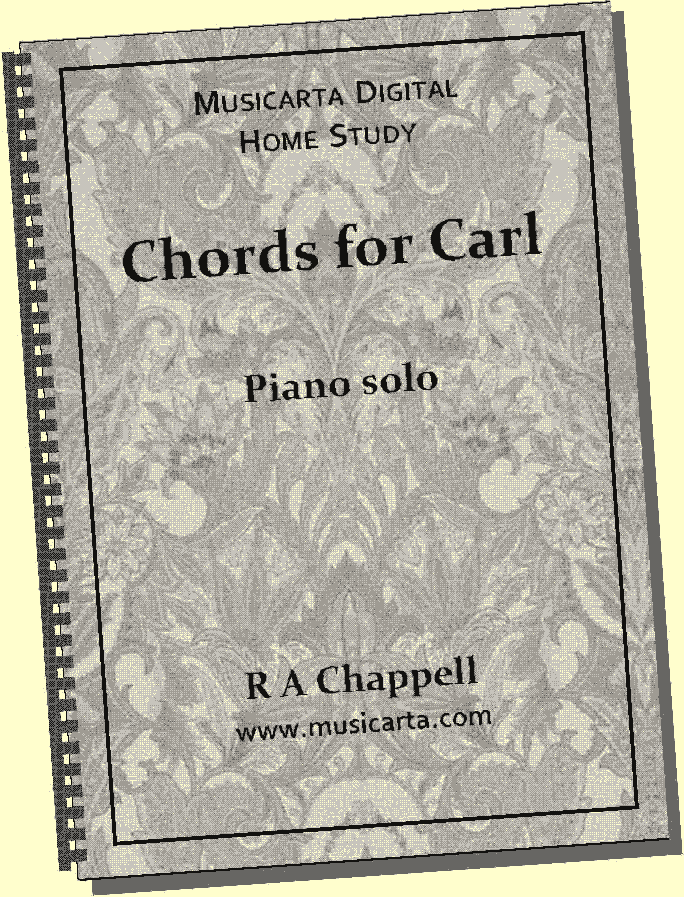
Chords for Carl
- Piano Solo -