Musicarta Piano Lessons Online blog page
Welcome to Musicarta’s RSS/blog page, where you can easily keep up to date with what's new at Musicarta.
But first, a word from our sponsors...
Please note: If you have discount codes, you need
to be on the Discount Sales page to use them!
Jul 20, 2019
MEPS Reboot Mods One and Two now out
Modules One and Two of the Musicarta Easy Piano Style video reboot are now out and linked in the Musicarta Patreon Zone. MS for the first two 'Pairs of Chords' modules is also available for you weekend doodling pleasure. Enjoy!
Apr 21, 2019
Pentatonics Workbook sample content pages
Getting round to finishing some sample content pages for the Musicarta Pentatonics Workbook on Udemy. Just one of three so far. Pop along and perhaps get inspired for a bit of an Easter reboot.
Continue reading "Pentatonics Workbook sample content pages"
Apr 15, 2019
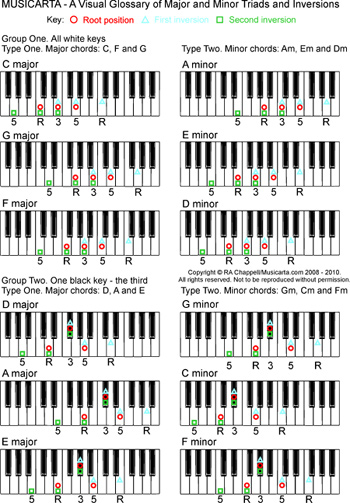
Chords 101 now available
The Musicarta Chords 101 study pack has HIT THE SERVERS! Specifically, the PATREON servers - Chords 101 joins perennial favorite The Pyramids Variations in Musicarta's economical (only US$5.00 a month!) Patreon Tier One.
Click through and discover how to knock your chords into shape for more and better keyboard composing!
Apr 02, 2019
Pentatonic Hanon
Watcha gonna practice today? Something that COUNTS, that's what! Get with the pentatonicss and figure out this latest hip finger-warmer.You know it makes sense!
May 26, 2017
Hanon finger exercises - a humanitarian approach
Let’s face it – it takes a lot of time and practice to build good keyboard technique and get to the point where your fingers (sort of) do what they’re told.
The Hanon finger exercises have been part of that equation for generations, but Musicarta has been concerned for some time that the many free printed versions are a rotten introduction for the self-propelling keyboard student.
Indeed, one sight of those thick-black-ink-drenched pages is enough to put most sensible people off for life.
And so, (music swells dramatically) the idea of a talk-through video introduction for beginners was born.
And here it is, in fact. On two pages – Page One and (you guessed it) Page Two with a covering Exercises page on the navbar. A one-octave version with non-threatening dots and a human approach withal.
Hard copy to download here; Mister Musicarta easy-reference video playlist here.
The choice is yours! Rome wasn’t built in a day! Practice makes perfect! Steady as she goes, the tortoise and hare, four walls do not a prism make, and so on.
Yours in time!
Mister MusicartaYour creative keyboard companion.
Oct 30, 2016
Seven clicks from trending on Skillshare!
Needed by Tuesday 01/11 to start trending – just seven more clicks on these FREE Skillshare-hosted Pyramids Variations video lessons:
Click through and spread the music – and grab three whole months of full Skillshare Premium membership for a mere $0.99!
Yours in harmony
Mister Musicarta
Your creative keyboard companion
P.S. Feel free to spread the love and pass it on to your friends.
Oct 21, 2016
Musicarta on Skillshare
Have you heard about Skillshare? It's an 'edutainment' site with thousands of creative and life skill video classes.
I've just put the eight Pyramids Concert Performance build-up video lessons up there, and to kick-start the Musicarta presence on the new platform, I've created 50 free trial coupons for Lessons One and Two.
Here they are.
And then Skillshare have given me this fantastic discount link, which will give you three whole months of full premium membership (membership typically costs ~$10/mo) for a mere $0.99, including access to all eight Musicarta classes and any new ones coming up in the next 3 months.
So if you like the lessons, you can either come back and use the $0.99 three-month Skillshare Premium discount link - or buy the whole package direct from Musicarta using discount code
on the Musicarta discount sales page.
If you're looking to keep your brain alive and/or move along in your creative journey with Musicarta, the Skillshare deal is a really good opportunity. You can cancel your subscription at any time and you lose nothing.
Yours in harmony
Mister Musicarta
Your creative keyboard companion
P.S. Feel free to spread the love and share with your friends and rellies!
Jul 22, 2016
Pyramids Variations 2nd edition out now!
Pyramids Variations second edition out now!
The second edition of Musicarta Pyramids Variations has just been released.
The Pyramids Variations is a creative keyboard home study course which coaches beginners and re-starters to an impressive ‘New Age’ piano solo in just eight lessons. Watch a video of the Concert Performance on MisterMusicarta YouTube by clicking through here.
In Part Two, you learn a set of variations which model all the contemporary popular styles (pop, rock, New Age and jazz) keyboard player’s knowledge and skills .Watch the Mister Musicarta YouTube Pyramids Variations playlist for a selection by clicking through here.
With website audio and video support, the Pyramids Variations offers pianists of all ages and stages fast-track guidance to a performance beyond expectations and a practical, step-by-step introduction to 'composing at the keyboard'.
The home-study download comprises a 150-page workbook PDF, 200-plus MIDI files of the musical examples and a free ‘virtual keyboard’ MIDI file player.
And the entire workbook is replicated online in a password-protected purchasers’ zone, where you can hear audios of all the musical examples and watch more than 50 videos of the performances and practice suggestions.
The Pyramids Variations is a comprehensive creativity booster for every keyboard player.
Building major and minor chords, understanding chord symbols, forming inversions, seventh chords, suspensions and ‘slash chords’, the circle of fifths, song form, syncopation and anticipation, playing a chord sequence in different rhythms – the Pyramids Variations is a practical, hands-on introduction to essential popular music theory.
Browse the extensive try-before-you-buy sampler pages starting on the series home page, and you’ll see how you could soon be playing a beautiful solo without music and improvising on a chord sequence as if you’ve been doing it all your life!
Your place on Musicarta Publication’s RSS list has earned you a 33% discount on the usual selling price of US$14.95.
Use this discount code TPVNtcASGawZ9 on the discount sales page, and the Pyramids Variations is yours for just $9.95!
But hurry – your discount code is only valid until the end of August!
Improvising and composing at the keyboard – or ‘messing around with chords’, as it’s sometimes known! – is one of life’s great joys, and it’s Musicarta’s mission to put it within your grasp. Come along to www.musicarta.com or visit Mister Musicarta YouTube and see how we’re making it happen!
Yours in harmony
Musicarta
Your creative keyboard companion
Dec 31, 2015
Two Easy Pentatonic Fugues (PD 29-12-15)
For your pentatonic edutainment, Two Pentatonic Fugues at Mister Musicarta YouTube.
One of the attractive properties of the pentatonic scale is that it harmonises so well with itself. The adventurous keyboard player can 'doodle' with both hands in the same pentatonic scale and scarcely play a note wrong.*
If your second hand imitates or repeats what your first hand played, you’re playing a fugue – a musical composition in which themes are repeated with a delay. These two easy fugues in C pentatonic major were created in just that way.
See full teaching notes on the website page.
Get it while it’s free! All will be moved to the Member’s Only pages when the Musicarta Pentatonics Workbook comes out in February.
Your creative keyboard companion
Mister Musicarta
Jul 03, 2015
Work Song (Pentatonics Diary 02-07)
For your pentatonic edufication:
Work Song (Pentatonics Diary 02-07) at Mister Musicarta YouTube.
A deliberately ‘dirty’ performance of this time-honoured theme. Just the five tones, no semitones. The theme at practice speed for learning is at the end of the video.
I’ve made it a four-repetition chorus in A and B minors, for the transposing bonus. So it’s an AABA, both ways of looking at it. You don’t need to play it as fast as here, or copy the end-of-phrase octave-roll drumming.
You should aim to be able to ‘see’ this riff practically anywhere on the keyboard – although you’d be unlikely to play it in F sharp minor. (Not an easy key on any instrument!) D and E minors would give you an all-white-key version of this AABA arrangement.
Try singing along! Anybody can sing the blues, and ten minutes of pentatonics will give your mojo a boost any time of day!
For your convenience, the YouTube video:
Work Song (Pentatonics Diary 02-07).
Brush up on the basics first, starting with Musicarta Pentatonics Module One.
Yours in harmony
Mister Musicarta
Your creative keyboard companion
Jul 01, 2015
Pentatonics in the cross-hairs
Musicarta is on the move again, with pentatonics now in the cross-hairs.
Any musician worth his/her salt should be able to pick out a pentatonic riff at the keyboard – either make one up or play one by ear.
Repetition is the key, of course – the more you play, the more obvious it becomes. You hear the notes in your head and you ‘just know’ what they are.
So get ready for a trickle of ‘Pentatonic Diaries’ from our Claremont studios. Brush up on the basics, starting on the first Musicarta Pentatonics web page, then see how easy it is to pick up the new Pentatonics Diary 01-07 entry over at MisterMusicarta YouTube.
It’s in A minor – the root plus two notes up and two notes down. Only the basic five notes, no semitones. The left hand copies the right hand, but doesn’t play all of the notes. how many it does (or doesn’t) play varies, as part of the pattern. (Sometimes it plays notes that the right hand doesn’t play.)
Make a point of working out some decent fingering so you’re not always ‘running out’. Start RH2, LH4 and take it from there.
The optional ‘B section’ (Part Two) plays the pattern in D (D minor) and C (minor). “If you want to learn something, transpose it!” D minor pentatonic is another all-white-key scale (like A minor); C minor pentatonic has two black keys – E and B flats.As an exercise, transpose the main riff into E minor. That’s another all-white-key pentatonic scale so you can 'just move your hands up a fifth' and do the same thing. The ‘B section’, were you to attempt it, would be back in A minor, then G minor (B flat).
If you get that, then try starting in D minor. The B section will start in G minor (see above), then pass through F minor (A flat and E flat). And you know your riff in six keys!
Practice visualising the riff away from the keyboard. How many keys can you ‘see it’ in?
Pentatonics – so much music, and so easy to get into! Watch out for more – get the site RSS, subscribe to MMYT, follow Mister Musicarta on Facebook. Little and often, never give up, the tortoise wins the race… .
For your scrolling convenience, those links again:
The first Musicarta Pentatonics web page, and
Thanks for playing with – Musicarta
Your creative keyboard companion
Apr 20, 2015
Up-to-date Musicatra Sitemap pdf
For your studying convenience - an up-to-date, linked Musicarta sitemap pdf is now available.
Because, sadly, looking for stuff doesn't count as work!
Yours in harmony
Mister Musicarta
Your creative keyboard companion
P.s. You can always search the site, too.
Apr 16, 2015
Troable following pdf links in Foxit
I've recently had trouble following links in pdf documents using Foxit reader. Research reveals the solution is to make sure the hand grabber tool is selected before hovering.
Yours in harmony
Mister Musicarta
Your creative keyboard companion
Apr 16, 2015
Introducing... 'Introducing...
You may find // may you find inspiration in Mister Musicarta's latest precis of his life's work - ‘Introducing Musicarta’.
Yours in harmony!
Elf 49
|
THE PENTATONICS WORKBOOK The immediately recognizable five-tone pentatonic scales are easy to find and underpin much of the popular music we all love. |

|
|
|
The MUSICARTA 12-BAR PIANO STYLES WORKBOOK The irresistible drive of the twelve-bar form raises the musical vitality of everybody it touches! The Musicarta Twelve-bar Piano Styles workbook offers a methodical approach to learning essential 12-bar keyboard syncopations and understanding the simple harmony that makes this timeless music so accessible and attractive. |
|
|
The MUSICARTA The modes are known as scales for improvisation – and for generating intriguing chord sequences not available in the conventional major/minor key system. Here is a methodical, ‘lean’ approach to building a sound and productive knowledge of modes for the modern-styles keyboard player, packed with riffs which will expand your chord vocabulary and your repertoire of rhythmic keyboard skills. |
|
|
MUSICARTA EASY The Musicarta Easy Piano Style shows you how to get your hands on the keys and start making music right away! With lots of graphics, full audio and MIDI support and all the solos on the Mister Musicarta YouTube MEPS video playlist, you’re sure to get some beautiful pieces into your repertoire quickly – and learn how to find the music in the keyboard for yourself. |
|
|
The CANON PROJECT Pachelbel’s Canon in D is perhaps the most famous chord sequence of all time, and the basis of dozens of popular hits. If you can play and understand the Canon chord sequence, there isn’t much in popular music harmony you won’t be able to figure out! Its regular structure also makes it a great springboard for improvising and composition. |
|
Amazon Books also available Udemy
Click through to the Canon Project YouTube playlist here
|
OUT NOW! |
THE MUSICARTA BEAT & RHYTHM WORKBOOK At last! An effective approach to keyboard rhythm & syncopation skills. Learn more! |
ONLY $24.95! |


 THE LOGO

The MusicartaA methodical approach to keyboard syncopation for
|
PUBLICATIONS
exciting keyboard
creativity courses
CHORDS 101
WORKBOOK

~HANON~
video course

Musicarta
Patreon
PENTATONICS
WORKBOOK
video course
Creative Keyboard
video course

BEAT AND RHYTHM
WORKBOOK

- Volume 1 -

12-BAR PIANO
STYLES WORKBOOK
MUSICARTA MODES
WORKBOOK
PIANO STYLE
CANON PROJECT
video course
VARIATIONS
video course
- Piano Solo -
video course
- Piano Solo -

YouTube playlists